
Weekly News
|
|
How to place indoor air quality monitors in offices and commercial buildings
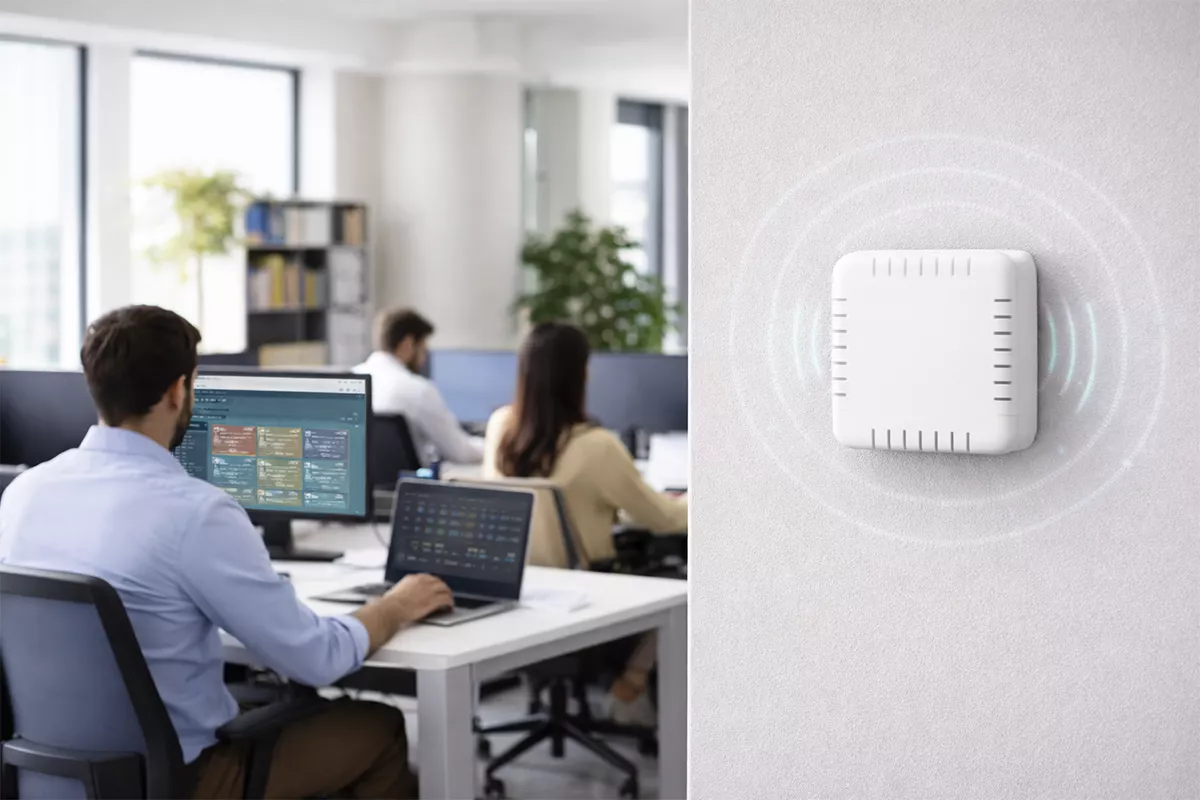
Installing an indoor air quality monitor is a powerful step – but placement determines whether the data supports smart building decisions or leads you in the wrong direction. In offices, ventilation, occupancy, and microclimates create large variations within the same space.
With proper placement, you measure the air people actually breathe – not air from a supply vent, a sunlit window, or an empty corner.
|
|
3 quick rules for better IAQ data
✓ Start in the breathing zone
– approximately 1.1–1.7 m above the floor
✓ Avoid HVAC and openings
– at least 1 m from vents, doors, and windows
✓ Place where people work
– meeting rooms, open areas, and offices
|
|
From measurement to building intelligence
When sensors are placed correctly, you gain insight into CO2 trends, ventilation performance, humidity impact, and pollution patterns over time. This makes it easier to optimize HVAC schedules, proactively address comfort complaints, and make informed decisions.
|
|
Proper placement determines
whether your air quality data becomes actionable – or misleading.
|
|
|
|
|


